
Anderson County Warrant Searches
No single Anderson County search gathers every warrant across the sheriff, Summary Court, Municipal Court, Family Court, and General Sessions. So work from the paper that likely started the matter. Copy the court and case number exactly, letters and leading zeroes included. No paper in hand? The Sheriff's Warrant Division can route a county-service question to the right office. For case history, the South Carolina Public Index covers what courts make available, and the Judicial Branch Traffic Ticket Search covers eligible citations. A hit points to a file. It settles nothing about the warrant itself. Only the issuing court or serving agency can say whether an active warrant remains open, was served, or was recalled.
- Check the Public Index for a court case or docket entry.
- Use Traffic Ticket Search for a citation, license and state, or name and birth date.
- Call the Summary or Municipal Court named on the citation if the case is missing or shows an FTA.
- Call ACSO Warrant Division about county-held process, or the Clerk for a General Sessions file.
- Ask for the current court instruction and keep the case number and any receipt or order.
Anderson County's Phone-First Warrant Check
The sheriff here posts no full online warrant list. To check by phone, ACSO's Warrant Division answers three direct lines: (864) 260-4412, (864) 260-4413, and (864) 260-4414. Published weekday hours run 8 a.m. to 4:30 p.m., holidays aside. Ask whether ACSO holds the process, which court issued it, and who can confirm status. Other ACSO tools answer different questions. The Inmate Search shows custody only, not unserved warrants. The Most Wanted list is curated, not exhaustive. For official contacts, use the agency directory, and call before driving to 305 Camson Road. A clerk confirms dates and docket entries; the Warrant Division handles service questions. Start with whichever office owns your question.
What a Warrant Search Asks For
No Anderson County office publishes a warrant form with name, date-of-birth, court, or warrant-number fields. The fields below belong to the statewide Traffic Ticket Search. That tool locates eligible citation records, nothing more. It is not a warrant search.
| Search Field | Type | Required | Notes |
|---|---|---|---|
| Citation number | Text | For citation mode | Enter the ticket or case number without spaces. |
| Driver's license and state | Text and menu | For license mode | Use both values. |
| First name, last name, birth date | Text and date | For name mode | All three are needed in that mode. |
| Search mode | Selection | Choose one | Citation, license, or name. |
The Judicial Branch search covers eligible tickets, though court and city coverage varies. The statewide case-roster page lets you pick a county, city, or ZIP to find a Public Index route. See the court-roster search page for Anderson County before opening the case system.
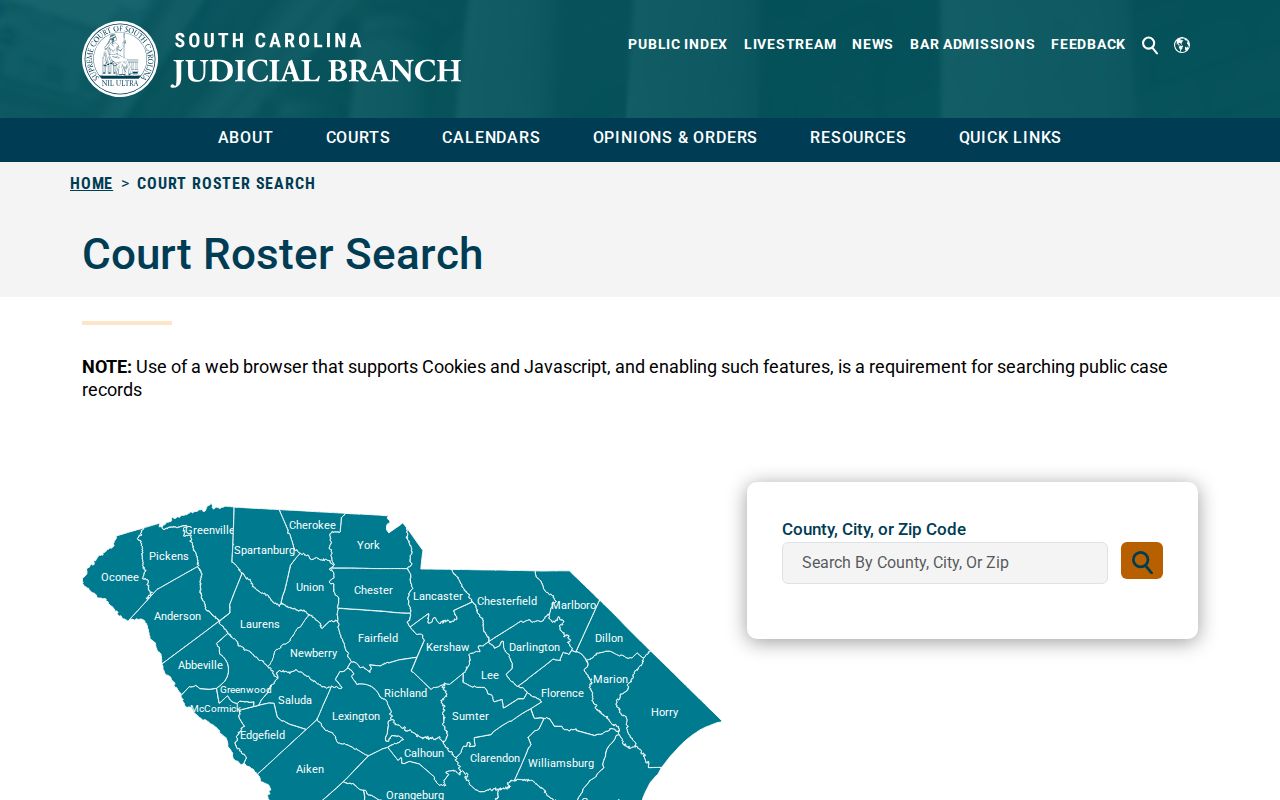
The selector routes an Anderson County searcher to a court's case portal. It is not a statewide warrant database.
Anderson County Traffic Citation Search
SC.GOV's payment path starts with a county or municipality choice, then asks for a last name and the ticket or case number. Hit "Locate Case" and read the record before paying. State guidance says entry can take three to five business days, and the ticket FAQ suggests allowing a full week. A new citation missing from the system? Call the court named on it. Remember what payment does. It locates or pays an eligible case, but it does not prove a separate bench warrant was recalled. Ask the issuing clerk in Anderson County whether payment alone satisfies the order, whether you must appear, and when the record updates. The official SC.GOV ticket-payment page lists the steps and participating municipalities.
Anderson County Warrant Search Results
A case record may list a case number, court, charge or citation, key dates, and docket entries. A warrant document can go further: issuing judge, sworn facts, bond terms, a service return. Public sites do not show the same fields for every Anderson County court, and some data gets redacted.
| Number | Copy from the original paper |
|---|---|
| Issuing court | The judge or clerk who controls the case and recall. |
| Offense or order | The charge, citation, missed date, or order tied to process. |
| Bond and service | Ask the court or Bond Court; do not infer terms from a case listing. |
| Status | Issued, served, returned, recalled, or quashed. Local status codes are not published as one county glossary. |
A number identifies a file. It does not say whether an Anderson County warrant is still active. Get status from an official office.
Anderson County Warrant Results Need Confirmation
An empty search can mean many things. The warrant may sit in a different court, the record may not be entered yet, the city citation may be ineligible, or the file may be sealed. A name search can also return several cases at once, so use the court, date, and case number the clerk confirms to tell them apart. South Carolina's Public Index itself warns that online data lags and is not an official record. The ACSO Most Wanted page is curated too, and a missing name there proves nothing. If a result and a clerk's answer conflict in Anderson County, keep the written court instruction and ask which system updates.
Anderson County Warrants: Who Holds What
Each office holds its own piece. General Sessions criminal files and warrant transmittals run through the Anderson County Clerk of Court, 100 South Main Street, (864) 260-4053. Anderson Central Summary Court sits at 2404 North Main Street, (864) 260-4156 or (864) 260-4055. City tickets belong to the Municipal Court named on the citation. ACSO's Warrant Division serves county process but does not issue every case. The Clerk of Court page describes its criminal-record role. For a city docket, call that city clerk; for federal process, use the federal court or counsel. Only the issuing court can recall a warrant. A sheriff or detention lookup never replaces a clerk's case status.
Anderson County FOIA and Warrant Records
South Carolina's FOIA lets you ask for records the Anderson County Sheriff's Office already keeps. The printed form is optional. A plain letter works if it describes the warrant record you want, such as your own case, a warrant number, or a date range. Ask for something that already exists. The office will not build a fresh list from several systems. ACSO's request form asks for a name, an optional birth date or age, and the incident's place and date. It also wants a description, your contact details, and a signature. Fees cover search time and copies. A deposit may be required first. If the estimate comes back high, narrow the request. Read ACSO FOIA instructions for the timing rules, the email address, the mailing address, and the exemptions that apply.
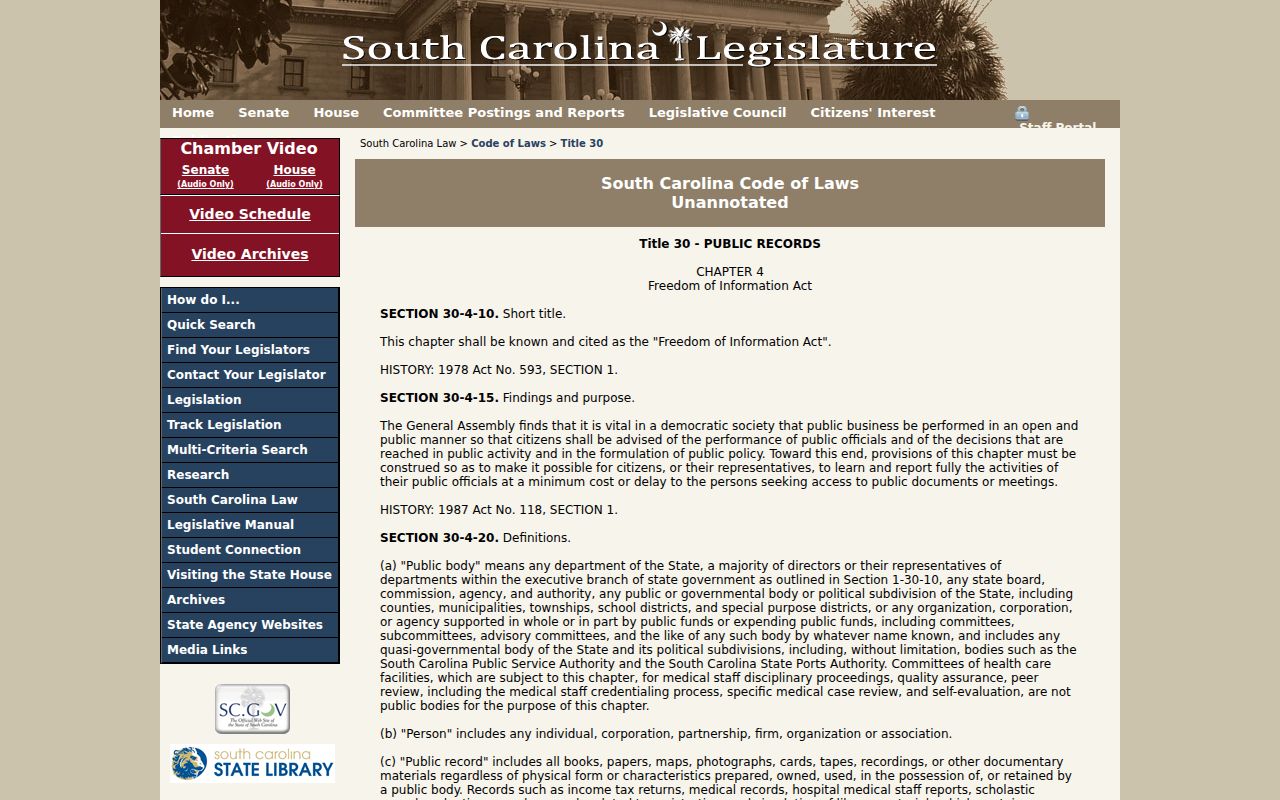
State law lets Anderson County withhold or redact investigative, sealed, safety, and confidential material.
Which Warrants Stay Restricted
Juvenile records stay confidential under South Carolina law. Sealed process does too. Active investigations, confidential sources, privacy, and safety concerns can also limit a response. A blank Anderson County search or a partial FOIA reply is an access result, not proof that no warrant exists.
Anderson County public-record limits:
S.C. Code Ann. §§30-4-30 and 30-4-40 set general access rules and law-enforcement exemptions.
S.C. Code Ann. §§63-19-2010 et seq. protect juvenile court records, with limited exceptions.
Rule 610 governs requests for compiled judicial information and limits bulk requests.
When a record is restricted, ask the Clerk or the issuing court directly. Anderson County staff can say what may be released and whether counsel must request review.
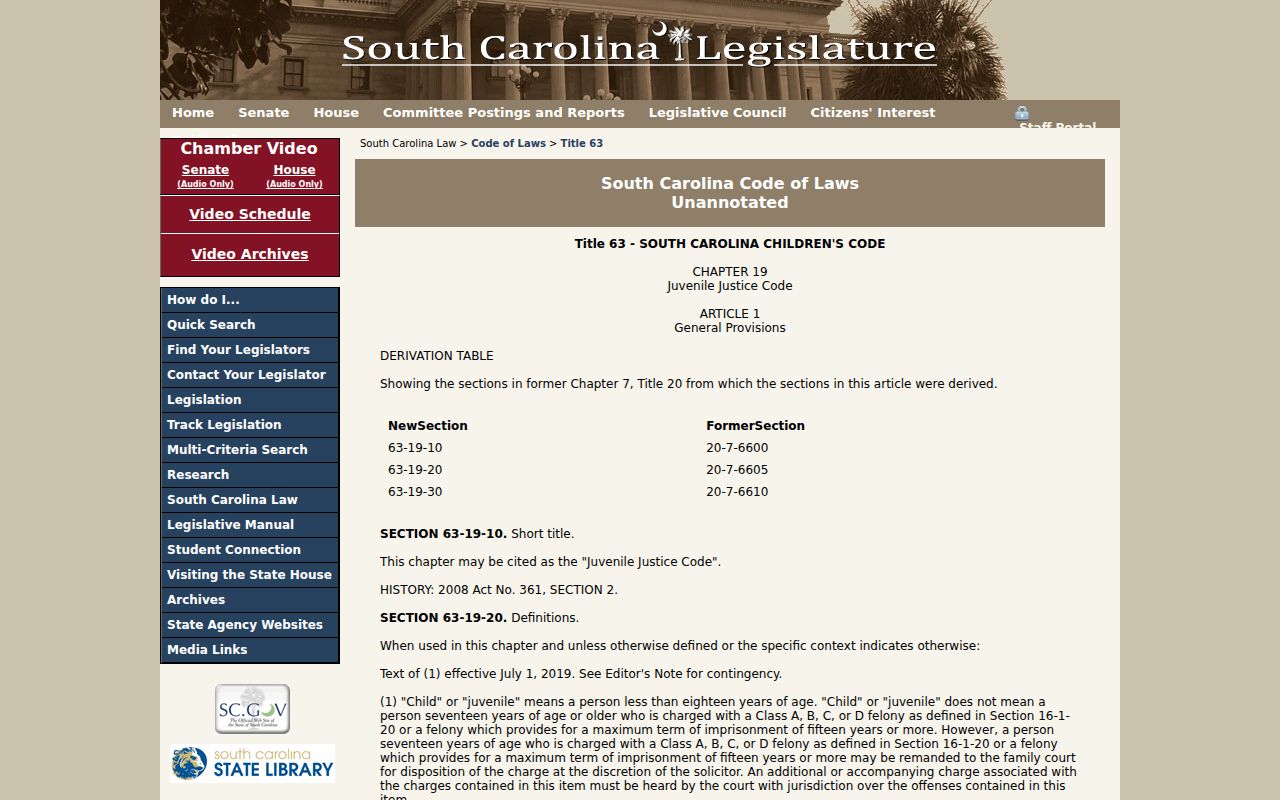
The statute concerns protected juvenile information, not a general public warrant search.
FOIA Requests Need a Narrow Record
Send written FOIA requests to the Sheriff's Office, ATTN: FOIA, 305 Camson Road, Anderson, SC 29625. Email works too. The form lists foia@andersonsheriff.com, and a printed form is not required. Anderson County's published determination window is 10 days. Records older than 24 months get 20 days. Weekends and legal holidays do not count, and production follows later deadlines. Search and redaction time runs $20 per hour. Black-and-white copies cost 25 cents per page and color copies 35 cents, with a 25 percent deposit possible. These are FOIA costs, not a fee for confirming a warrant. ACSO posts no separate warrant-search charge.