
How Arrest Warrants Work in Anderson County
Behind every Anderson County arrest warrant sits a sworn statement. An officer sets out facts under oath, and a judge reads them for probable cause. If the judge signs, the paper authorizes an officer to take a named person into custody for a specified alleged offense. A bench warrant works differently. It usually follows a missed date or another court order in a case already open. Lower-court warrants in Anderson County come from a Magistrate or Municipal Court. More serious criminal files can move through General Sessions, where the Clerk of Court receives and maintains the papers. Note the issuing judge and court. That court controls the next hearing and any recall.
Anderson County Arrest Warrants: Affidavit Review
A 2025 South Carolina Judicial Conduct Advisory Opinion walks through the normal-hours routine. An officer brings the affidavit to the clerk. The clerk enters the warrant in the Judicial Branch case system. The officer then swears to it. A magistrate or municipal judge decides whether probable cause supports the charge in an Anderson County filing. South Carolina Code §22-5-110 separates an officer's request from a non-officer complaint route, which generally uses a courtesy summons. Miss that summons, and the statute allows an arrest warrant on the original probable-cause basis. The court still decides the case-specific action. Read the Judicial Conduct Advisory Opinion and S.C. Code Ann. §22-5-110 to see both rules spelled out.
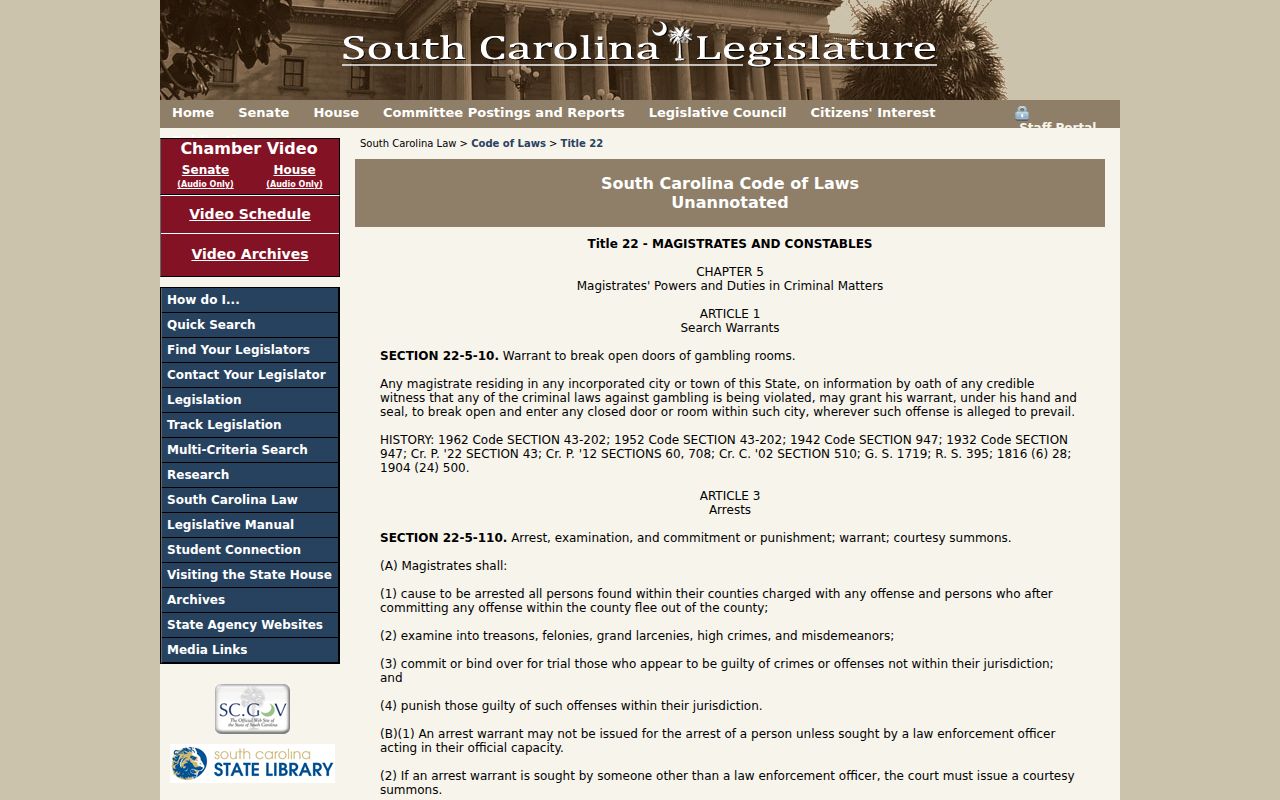
The statute sets a legal route; it is not an online warrant-status service.
Anderson County Arrest Warrants: Contents and Terms
A warrant form packs in many fields. For an Anderson County reader, three matter most: the court, the case number, and the offense label. Those route your question to the right clerk. Personal identifiers and the sworn narrative may stay redacted or restricted under court rules and law.
| Issuing court | Magistrate, Municipal, Circuit, or other authorized court. |
|---|---|
| Number and date | Case or warrant number and the date a judge signed the process. |
| Basis | Offense, statute or ordinance, and sworn probable-cause facts. |
| Command and return | Instructions to the serving officer, plus service or return details. |
| Bond and status | Confirm separately with the court or Bond Court; no countywide schedule is published. |
South Carolina forms follow a year and agency/county sequence style. Anderson County publishes no complete public number format, so never guess a number from a sample form.
Anderson County Warrants and 24-Hour City Judges
Anderson Municipal Court keeps judges on call around the clock. Its judges can issue city arrest and search warrants 24 hours a day. That availability is judicial only. It does not mean the courthouse clerk's counter, the ACSO Warrant Division, or any walk-in surrender window in Anderson County is open overnight. The city court also posts daily bond hearings at 8 a.m. and 4 p.m., plus weekday traffic and criminal dockets. Those are separate functions. Call the court to ask whether your warrant needs a bond hearing, a judge's recall, or another appearance. Anderson Municipal Court information gives current schedules and payment routes.
How Warrants Get Served in Anderson County
The Anderson County Sheriff's Warrant Division handles county-held service. Its direct lines are (864) 260-4412, (864) 260-4413, and (864) 260-4414. Anderson Police handles city process. A municipal warrant may be served by city officers, and Belton's official Police Services page notes that ACSO provides all of Belton's police services. Remember that the serving agency is not the court. Only the issuing court can recall an Anderson County warrant. After service, a return goes back to that court. Ask the clerk whether the warrant was served, returned, recalled, or still outstanding, since a custody entry alone leaves other warrants and cases unsettled.
Anderson County Sheriff's Office
305 Camson Road, Anderson, SC 29625
(864) 260-4412 / 4413 / 4414
Anderson County Detention
Detention questions and booking information
(864) 260-4201
The ACSO homepage shows its Law Enforcement Center contact, not a public warrant portal.
Call the published Warrant Division line before appearing in person.
Anderson County Warrants: Arrest, Summons, Bench
"Warrant" is one word covering different processes. A courtesy summons simply tells you to answer a charge. A bench warrant follows a judge's order or a missed setting, while an arrest warrant grows from an officer's sworn probable-cause request. In Anderson County, the label on the paper points you to the right office.
| Process | Why It Starts | First Confirmation |
|---|---|---|
| Arrest warrant | Sworn facts support probable cause | Issuing court and serving agency |
| Courtesy summons | Notice to appear on a complaint | Court on the summons |
| Bench warrant | Missed date or court order issue | Judge or clerk for the existing case |
Don't assume a missed ticket means a capias pro fine. Anderson County public materials use bench-warrant and failure-to-appear language, so ask the court how it labels yours.
Anderson County Warrant Service Follows Court
Many hands can serve an Anderson County warrant. ACSO, Anderson Police, another municipal department, a magistrate or municipal constable, or another authorized officer may all qualify. No public roster lists every constable assignment, so ask the issuing court or the Warrant Division which agency received the process. Detention and bond review are separate steps after an arrest. ACSO Detention handles custody and transport. Anderson Bond Court sits at 2404 North Main Street, (864) 231-3119. Exact bond terms come from the court record or the judge.
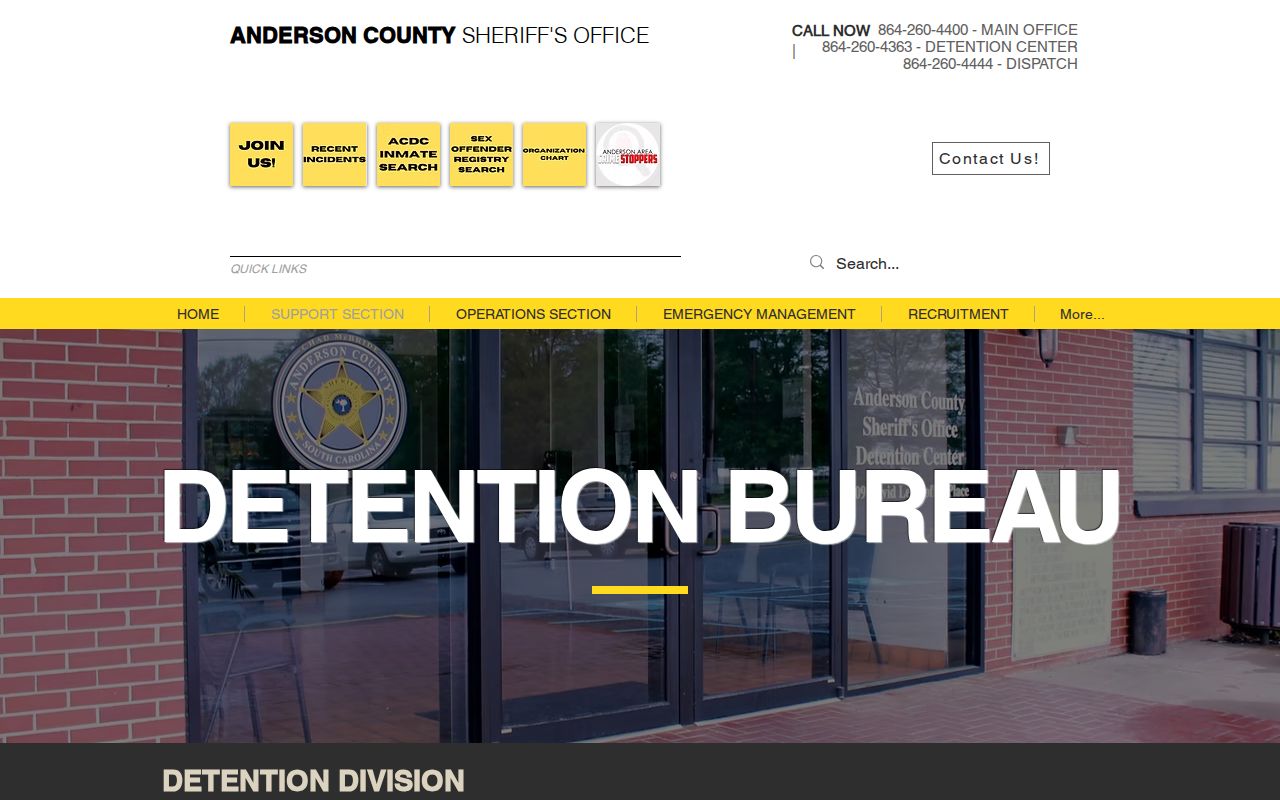
A booking record can show custody. It answers few court-status questions. Anderson County Detention reports an average daily population of about 400 and about 4,500 new arrests per year. Those figures measure agency workload, not the likely outcome of any single case.
Federal Warrants Use a Separate Court
A federal warrant is a different animal from an Anderson County warrant. The U.S. District Court for South Carolina handles it, along with federal magistrate judges, U.S. Marshals, and federal agents. The G. Ross Anderson Federal Building and U.S. Courthouse sits at 315 South McDuffie Street in Anderson. Bring photo ID, and expect device restrictions at security. For federal warrant records, PACER is the public dockets system. It is not a full warrant-status search. Sealed filings may not appear there. PACER fees apply under the federal court's schedule, though some filed documents sit in the free RECAP archive. For a current answer on a federal warrant, use counsel or the federal court itself. The federal courthouse location and rules page and the PACER fees page are the official sources for both.
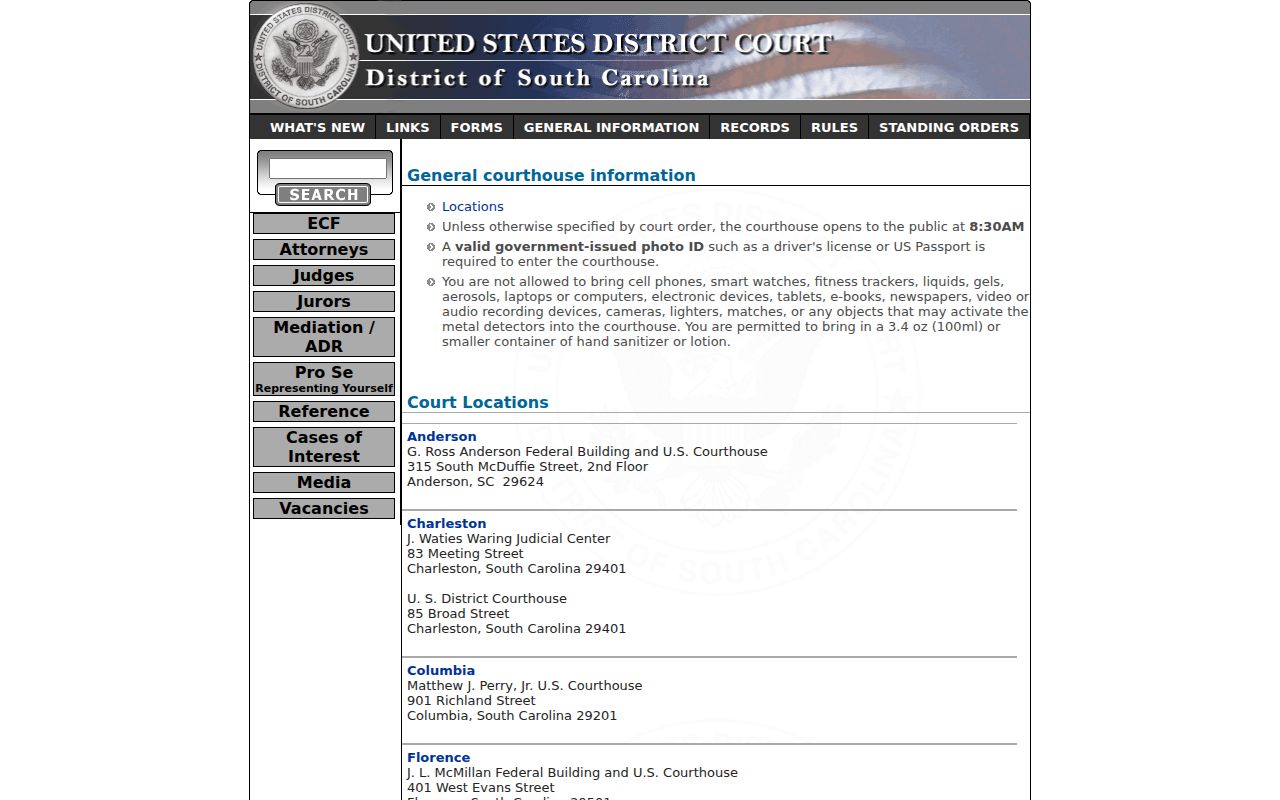
The federal courthouse is a separate system from the county Clerk and ACSO.
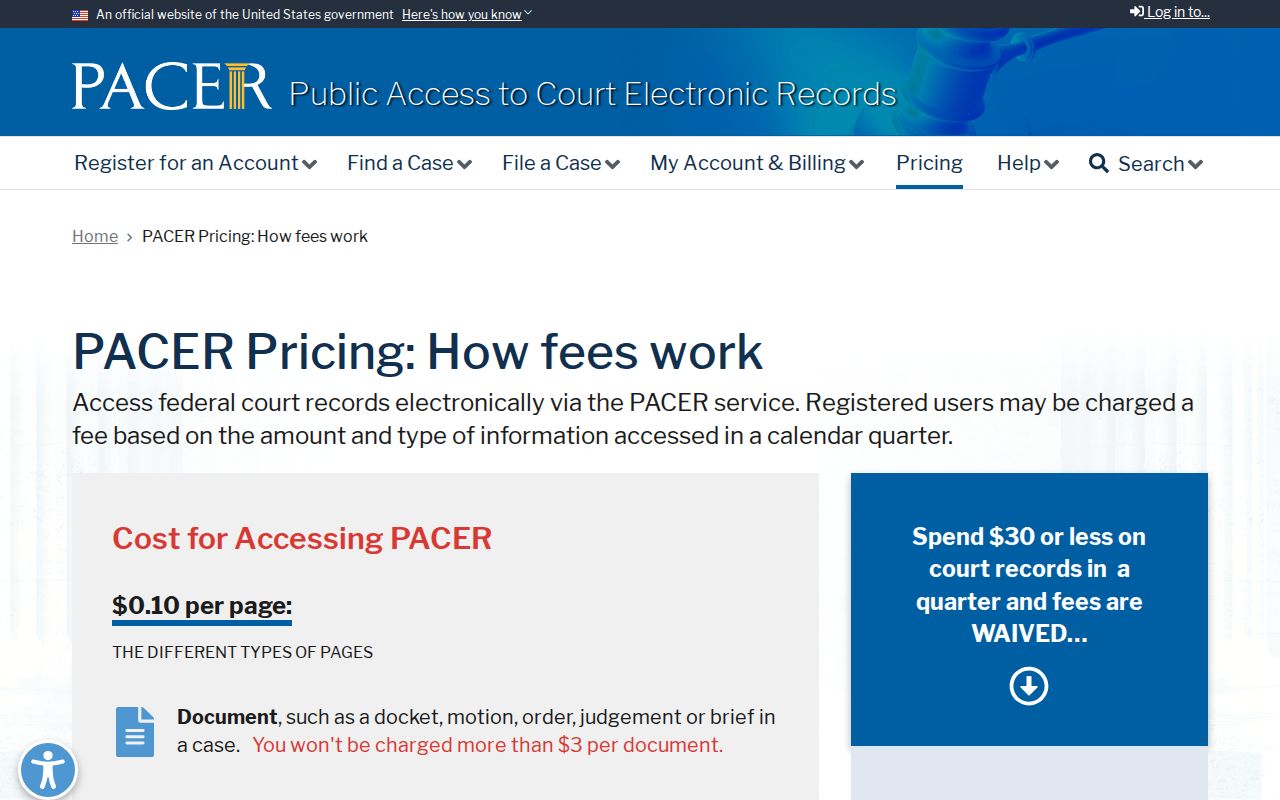
The fee page describes federal docket access, not a local warrant confirmation.
Bond Court Is Not the Issuing Court
Bond Court works out release conditions once someone is in custody. It cannot replace the judge who signed the arrest or bench warrant. Anderson County posts Bond Court daily at 6:30 a.m. and 4 p.m. Anderson Municipal Court holds bond hearings each day at 8 a.m. and 4 p.m. Which court applies, and which bond type, depends on the case. Posting bond secures an appearance when the court allows it. That step does not dismiss the charge, and it may not clear a separate warrant. Get the amount, the payment method, the next date, and a receipt straight from the court or its bond desk.
Before you appear: Ask counsel or the issuing clerk about booking, bond, and where to report; voluntary attendance is not a promise of release without booking.
Handling an Arrest Warrant in Your Name
Talk to an attorney first. Then call the issuing court or the Warrant Division using a number from an official source. Ask which court signed the warrant, whether it is bondable, whether a judge must approve a walk-through, and what paperwork to bring. Anderson County publishes no universal surrender form or recall motion. If you are already under arrest, ask detention staff which Bond Court and court file apply. After you pay, post bond, appear, or receive an order, keep the receipt or written direction. Ask when ACSO and the court record will update. Keep showing up for the underlying case.
Anderson County Arrest Warrant Record Access
Arrest records can hold names, birth dates, addresses, physical descriptors, and affidavit details. Juvenile information stays confidential. Law enforcement may also withhold records when release could harm an investigation, expose a source, invade protected privacy, or create a safety risk, so a Public Index or FOIA response can lawfully come back incomplete. Keep any request narrow and aimed at one existing record. Route it through ACSO FOIA or the Clerk, depending on who keeps the file. A blank online search never proves that no arrest process exists. South Carolina FOIA sets the access rules and the exemptions that govern these public records in Anderson County.