
Anderson County Warrant Checks
Anderson County publishes no countywide name search covering every active warrant. So work backward from whatever started it. Find the ticket, the court date notice, or the mailed paper, and copy down the court, the case or ticket number, and the type of case. That detail decides where you call. It might be a city clerk, a Summary Court, the General Sessions Clerk, or the Sheriff's Warrant Division. Official sources give the current answer. The South Carolina Public Index shows eligible case history, and the Traffic Ticket Search covers eligible citations, but neither one is a full warrant list. Ask the Warrant Division which court holds the process, then confirm with that court itself.
- Read the ticket, summons, bond paper, or court notice and copy its case number.
- Check the South Carolina Public Index for a court case, or the state Traffic Ticket Search for a ticket.
- Call the issuing Magistrate or Municipal Court about traffic, ordinance, or missed-date matters.
- Call the Anderson County Sheriff's Warrant Division about county service, or the Clerk for a General Sessions file.
- If the court confirms a warrant, ask about counsel, appearance, bond, recall, and proof that the case status changed.
No Single Anderson Warrant Search
No single portal lists every active Anderson County warrant. Each official tool covers one slice. The South Carolina Public Index is built around cases, the traffic site around citations, and the sheriff's Most Wanted page is a short public-help list, not a full roster. The ACSO Inmate Search reports custody, not every unserved warrant. The split follows how records are kept. A city court runs its own docket, Summary Courts take lower-level county cases, and the Clerk holds the General Sessions files. A blank result can mean a different court, a fresh entry, or something the public simply cannot see. When in doubt, call the office that issued the paper.
Warrants in Anderson County: The Main Types
Anderson County cases can end in more than one kind of court order. The label on the paper matters. It points you to the right court and the next step. An arrest warrant grows out of a probable-cause request, while a bench warrant usually follows a missed appearance or a broken court order in a case already open.
| Type | How It Arises | Who Issues It |
|---|---|---|
| Arrest | Sworn probable-cause facts support a new arrest process. | Magistrate, Municipal, or other court with authority |
| Bench / FTA | A missed setting or failure to follow a court order. | Judge in the court holding the case |
| Search | A sworn request describes a place, person, or property to search. | Authorized magistrate, municipal judge, or court |
| Traffic process | A citation case has an unresolved appearance or payment issue. | Issuing Summary or Municipal Court |
Anderson County Warrant Division: Three Phone Lines
The Anderson County Sheriff's Office posts three direct Warrant Division lines: (864) 260-4412, (864) 260-4413, and (864) 260-4414. Weekday hours run 8 a.m. to 4:30 p.m., except holidays, and the Warrants & Civil fax is (864) 260-4398. There is no published walk-in warrant counter, and the sheriff does not promise round-the-clock staffing on these numbers. Call before driving to the Law Enforcement Center at 305 Camson Road. Ask whether the sheriff holds the process, which court issued it, and whether your next stop is the court, detention, or Bond Court. The official ACSO directory names the division and its contacts. Think of it as a phone route for confirmation, not a name-search form.
Anderson County Warrant Records: What They Show
A warrant record can tie the paper to a court case, the reason for it, a judge, service details, bond instructions, and later status entries. South Carolina forms use agency, county, and year-style identifiers. No public search rule documents the exact Anderson number pattern, though. Copy the number exactly as your own notice shows it.
| Case or warrant number | Use the number as printed |
|---|---|
| Issuing court | Magistrate, Municipal, General Sessions, Family, or another court. |
| Basis | Offense and sworn facts, or a missed appearance or court order. |
| Bond | Amount and type, if set; confirm with the court or Bond Court. |
| Service and status | Issued, served, returned, recalled, or quashed. Ask the court to define its entry. |
A number by itself does not prove a warrant is still active. A dated receipt or court order can matter more than an older online result in Anderson County.
A Public Index Case Is Not Status
The South Carolina Public Index helps you find eligible cases, dates, and docket entries. It is not a live warrant-status guarantee. Its search covers selected records, and entries can lag behind recent clerk action. A file may also be sealed, restricted, or held by a court outside the same search. The Judicial Branch landing page makes you pick a county, city, or ZIP code and needs cookies and JavaScript turned on. Use the state court-roster search or the Public Index for case context, since those pages show rosters and docket history. Then call the issuing court for current warrant status. Public tools can narrow the question. Only Anderson County's Clerk, sheriff, or local court can give the current answer.
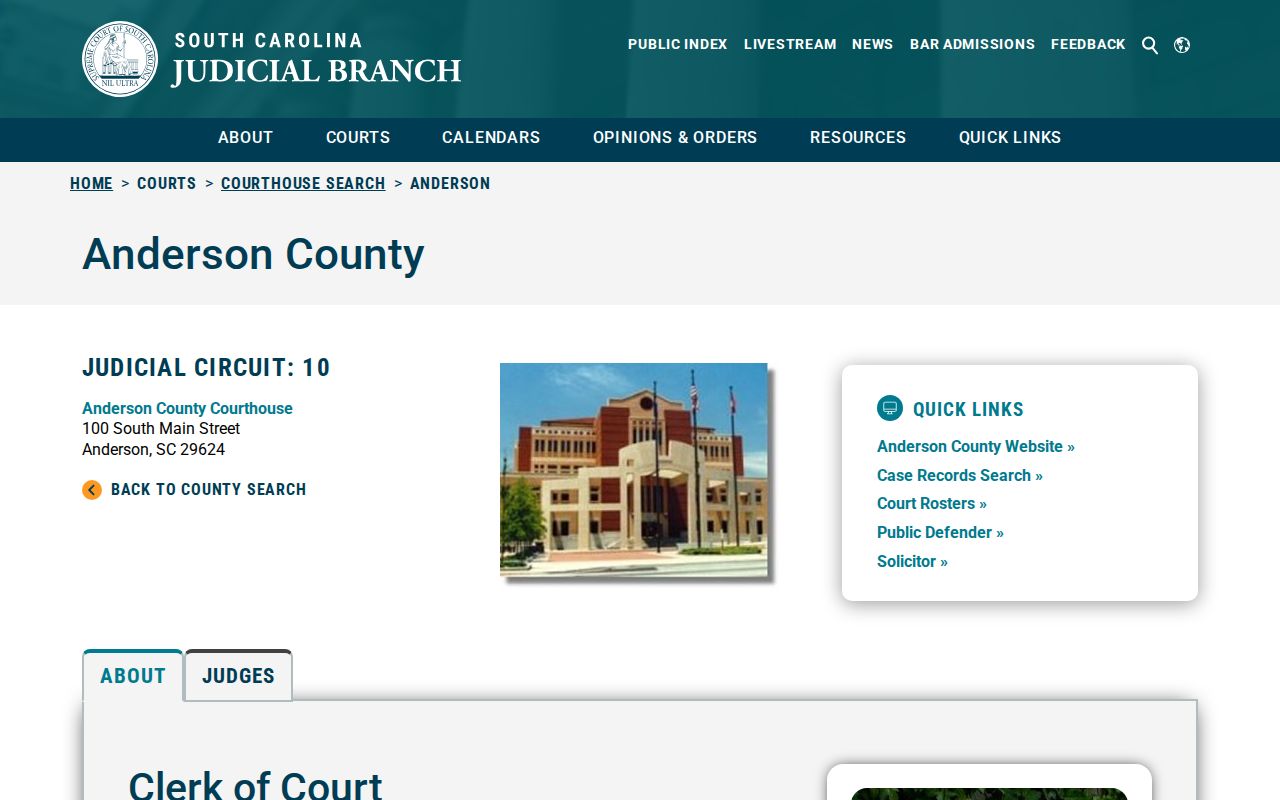
The courthouse contact page helps distinguish General Sessions records from lower-court and city cases.
Anderson County Warrants: Who Issues, Who Serves
Judges issue warrants. Law enforcement serves them. In Anderson County, the Circuit Court's General Sessions division handles serious criminal cases, and the Clerk of Court receives criminal warrant papers and keeps those files. Magistrates issue lower-court process, and municipal judges handle qualifying city matters. Keep one wrinkle in mind: the agency that serves a warrant is not always the court that can recall it. The Sheriff's Warrant Division takes county service questions. City police handle city process, except in Belton, where the official page says ACSO provides all police services. For court dates, fines, or recall terms, ask the issuing clerk or judge.
Anderson County Sheriff's Office, Warrant Division
305 Camson Road
Anderson, SC 29625
(864) 260-4412 / 4413 / 4414
Anderson County Court Caseload, Not Warrant Count
State reports cover workload, not one person's case. Anderson County appears there only in broad counts. The July 1, 2025 report counted 2,531 pending General Sessions warrants. A January 2024 report counted 2,923. Different dates and age groupings make the two figures hard to compare directly. The counts cover General Sessions only. They leave out traffic, municipal, Family, federal, and lower-court warrants, and they are no live active-warrant list; the 2025 state report is the source for the later figure.
Handling an Anderson County Warrant
If an Anderson County court confirms a warrant, ask an attorney about the safest way to handle it. A voluntary appearance, bond, reset, or motion to recall may be possible. The issuing judge controls that process. No countywide surrender form or walk-in procedure exists.
Plan first: Call the issuing court or counsel before appearing, and ask where to report, whether booking may occur, and what papers to bring.
Anderson County General Sessions business goes through the Clerk at 100 South Main Street, (864) 260-4053. Public Defender applicants out on bond must appear in person at the Clerk's office, bringing warrants, tickets, citations, and proof of income. $40 is the listed processing fee for eligible applicants. Bond Court is separate from the issuing court. Hang onto the case number. Keep the written order, payment receipt, and next court date too. Clearing the warrant does not end the underlying case.
Anderson County Warrant Courts Share One Address
Several Anderson County courts share one address. Anderson Central Summary Court and Central Traffic Court both sit at 2404 North Main Street, and the county lists (864) 260-4156 and (864) 260-4055 for that office. Anderson County Bond Court works from the same building at (864) 231-3119. Bonding runs daily at 6:30 a.m. and 4 p.m. Those hours help people already directed to a court date or bond review. Not every warrant gets cleared at Bond Court. Check the issuing venue first. The county's Magistrates page posts satellite contacts too. Belton, Starr-Iva, and Williamston each keep separate Summary Court routes, so the court name on your citation is a better guide than the nearest courthouse.
Warrant Record Access Under South Carolina Law
South Carolina's Freedom of Information Act gives you a route to existing Anderson County public records, exemptions aside. Name a record, a date range, or a case. It can't force a new countywide list. Anderson County publishes no ready-made roster. Juvenile records, sealed material, active investigations, safety details, and protected sources may be withheld or redacted. The ACSO FOIA page spells out written-request steps and current fees. Its form is optional. The two-page form asks for names, date of birth or age, incident place and date, a description, contact details, and a signature, so limit the request to a record already held.
South Carolina warrant access statutes:
S.C. Code Ann. §§30-4-30 and 30-4-40 address access, fees, timing, and law-enforcement exemptions.
Title 63, Chapter 19 makes juvenile records confidential, subject to limited exceptions.
S.C. Code Ann. §22-5-110 covers magistrate arrest warrants and courtesy summonses.
ACSO sets firm response times for Anderson County records. Requests are generally decided within 10 days, or 20 days for records older than 24 months, excluding weekends and legal holidays. A deposit may be required.
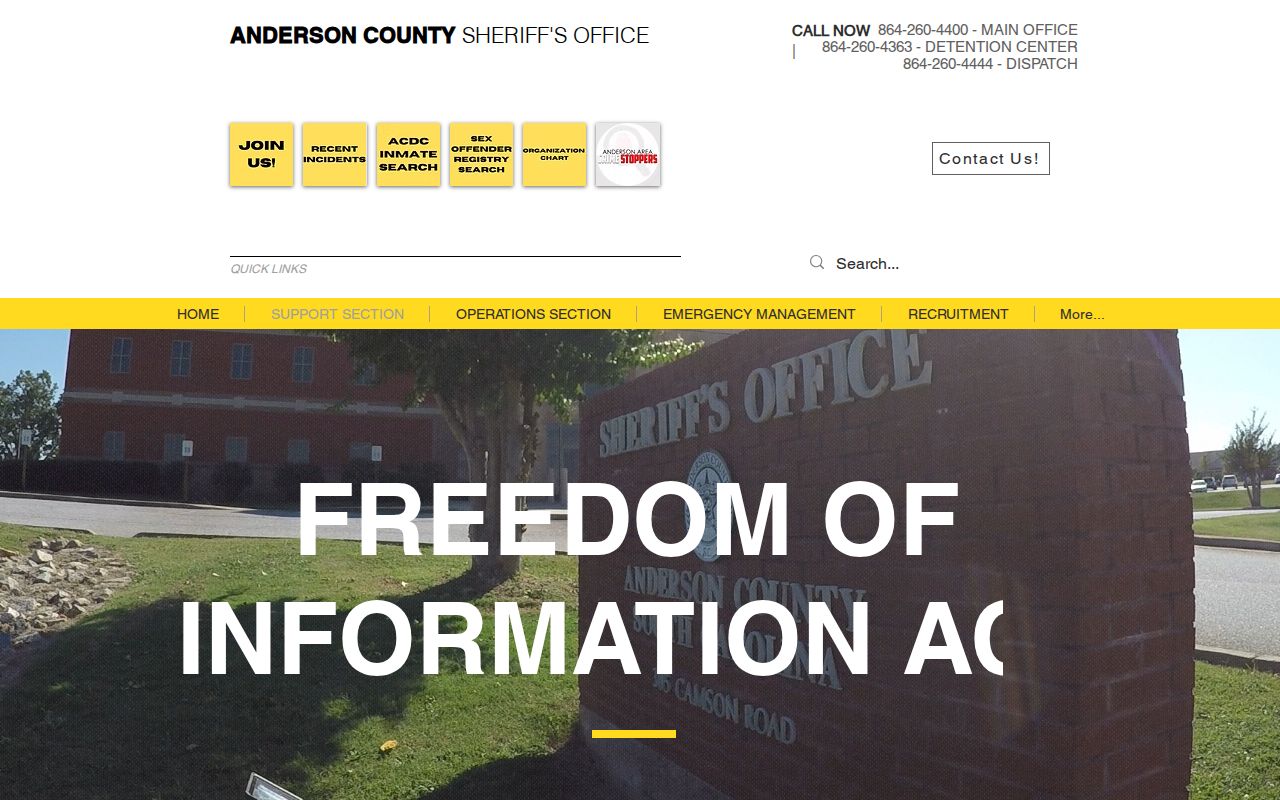
The official Anderson County FOIA instructions explain how to request an existing Sheriff's Office record and what may be withheld.
Federal Warrants Follow a Different Route
Federal warrants take a separate route from anything in Anderson County. Those cases belong in the U.S. District Court for South Carolina, where U.S. Marshals, federal agents, or authorized local officers may serve the paperwork. The federal courthouse in Anderson sits at 315 South McDuffie Street. Expect photo ID checks. Security also limits phones and other devices. PACER shows public federal docket entries. Sealed filings and warrant status may not show up there at all. RECAP and CourtListener may hold free copies of filed documents, but neither is a live warrant feed. Use the federal court, counsel, or U.S. Marshals. Keep the two systems apart. An empty Anderson County search cannot settle a federal question, and the Anderson County warrant check guide covers the local and state channels instead.
Five Cities, Five Court Routes
Not every case in Anderson County follows the same road. City ordinance and traffic tickets often start in a Municipal Court, while county and state tickets may land in Summary Court. Anderson City Court posts its schedules and takes payments. Belton runs a Municipal Court, and the Anderson County Sheriff's Office handles its police services. Williamston puts police and court functions at one civic address. Honea Path and Pendleton take a direct call to the clerk or town when no public warrant search exists.
Anderson
28,106 residents, 2020 Census. City Court and Anderson Police channels.
Belton
4,335 residents, 2020 Census. Municipal Court; ACSO provides police services.
Williamston
4,043 residents, 2020 Census. Police and Summary Court share 12 West Main.
Honea Path
3,686 residents, 2020 Census. Municipal clerk handles local court questions.
Pendleton
3,489 residents, 2020 Census. Town police and court routes need confirmation.
When a Court Changes the Date
Honea Path posted a September 3, 2026 notice. It postponed traffic and criminal cases set for September and October after the judge's death. Mailed notices would carry the new dates. Payment plans continued, and a payment route stayed open. It did not recall warrants by itself. Anyone in Anderson County who missed a date should check the current notice and call the clerk with the ticket or warrant number. A moved hearing, payment plan, or online receipt is not proof a judge recalled a warrant. Ask which order controls, and keep the answer in writing.